





































By Ismail Shuaib
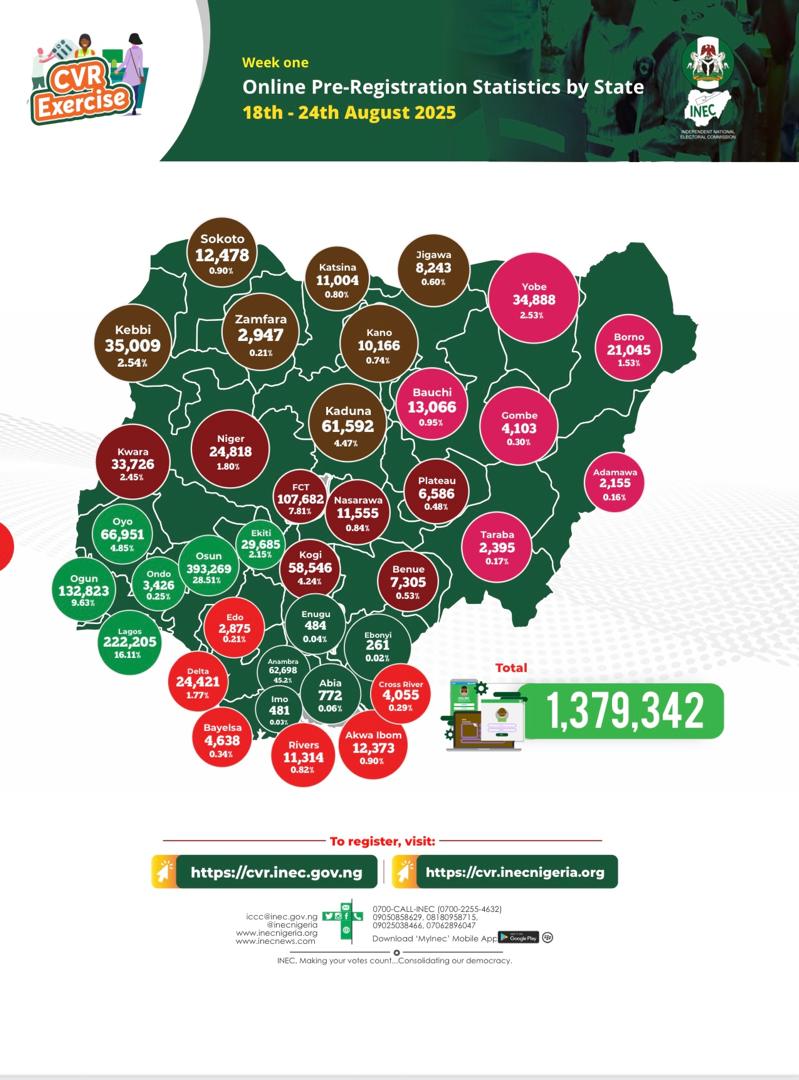
ABUJA: The Independent National Electoral Commission INEC has announced that more than 1.37 million Nigerians have completed online pre-registration within the first week of its Continuous Voter Registration CVR exercise.

In a statement issued on Monday, INEC’s National Commissioner and Chairman of the Information and Voter Education Committee, Sam Olumekun, said the commission’s online portal, which opened on August 18, 2025, had received 1,379,342 applications as of Sunday, August 24.
A breakdown of the figures shows that women accounted for 717,856 of the registrants, representing 52.04 percent, while men constituted 661,846, or 47.96 percent.
Young people between 18 and 34 years made up the largest category with 860,286 (62.37 percent). Students were the highest occupational group with 374,534 registrants, while 27,089 persons with disabilities (1.96 percent) also signed up.

The full statistics have been published on INEC’s official website and social media platforms.
The commission also commenced in-person registration on Monday across its 811 state and local government offices nationwide.
This phase will cater to individuals who prefer physical registration, as well as those who began the process online and need to complete biometrics.
INEC reminded citizens that the CVR is only open to Nigerians aged 18 years and above who have not previously registered, warning that multiple registrations remain illegal.
However, it clarified that registered voters may apply for transfers between states or within the Federal Capital Territory, as well as request replacements for lost or damaged Permanent Voter Cards PVCs.
The year-long exercise is scheduled to end on August 30, 2026. The electoral body urged eligible citizens to take advantage of the early months of the programme rather than waiting until the final weeks, stressing that previous experiences have shown late rush often leads to overcrowding and demands for extensions.