












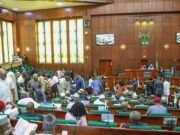



























BENIN: The long wait for thousands of contract teachers in Edo State came to an end on Wednesday as Governor Monday Okpebholo formally absorbed over 5,000 of them into the state’s Ministry of Education as permanent staff.
In a statement on Wednesday, Chief Press Secretary to the governor, Fred Itua, said the governor at a ceremony in the Government House personally handed out appointment letters.
For years, the teachers had worked on precarious contracts, earning a stipend of ₦65,000 monthly under the previous administration of Godwin Obaseki. Despite repeated promises, many were left in limbo — teaching without appointment letters, pension benefits, or job security.
Okpebholo said he chose to supervise the process himself to ensure transparency and give the teachers the recognition they deserved. “I had asked several times if you had received your letters. The answer was no. So today, I decided to supervise the process myself,” he said, adding that transport stipends would also be given to ease their travel burden.
The move has been hailed by many as a major correction of years of neglect. But education stakeholders say it also raises hard questions: Why did it take so long to regularize workers who were already performing critical duties? And how many more ghost or contract teachers remain in the shadows of Nigeria’s underfunded education system?
Commissioner for Education, Dr. Paddy Iyamu, in a rare admission, acknowledged the hardship teachers endured under the contract arrangement. “You have been suffering for years, yet you stayed committed to educating our children. Beautiful schools without teachers are useless,” he said.
Observers note that the plight of these teachers reflects a broader pattern in Nigeria’s public service — where workers are hired on contract for years, denied full benefits, and only recognized during political turning points.
While the governor’s intervention has been praised, some critics argue it also exposes the failures of continuity in governance. The same system that allowed teachers to languish on temporary status for years is the one now celebrating their confirmation as “historic.”
The ceremony, attended by senior government officials, ended in jubilation. But beneath the celebrations lies an uncomfortable truth: Edo’s education sector thrived on the resilience of underpaid, insecure teachers for too long.