















.Insists no Christian genocide in Nigeria • Says Trump’s narrative fueling violence • Seeks stronger U.S. partnership against terrorism
By Ismail Shuiab
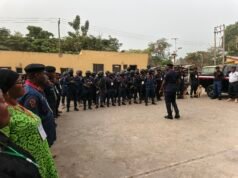
ABUJA: The Federal Government on Wednesday forcefully rejected calls for US military deployment to Nigeria, insisting that the nation’s armed forces remain fully capable of confronting terrorism and banditry without foreign troops.
It also condemned what it described as the “dangerous and inaccurate” Christian genocide narrative promoted by US President Donald Trump, warning that the claim is already worsening insecurity across the country.
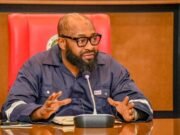
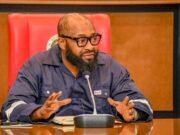
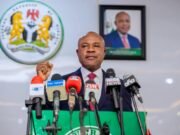
This firm position was articulated in a comprehensive statement issued in Abuja and signed by the Secretary to the Government of the Federation SGF, Senator George Akume, who declared: “The Nigerian Armed Forces are highly capable, experienced and professional. Nigeria does not require foreign troops.”
Akume stressed that the Tinubu administration considers the genocide narrative not only baseless but “deeply harmful to national security,” adding that it is “fueling more violence, sharpening sectarian suspicion, and giving opportunistic extremist actors a propaganda lifeline they had long lost.”
He emphasized that “no credible international organization has ever classified Nigeria’s security crisis as a genocide against Christians or any group.”
According to the SGF, the country’s security challenge has evolved along two distinct pathways over the last two decades: the ideological Boko Haram/ISWAP insurgency in the North-East and the economically driven banditry in the North-West.
“Across Nigeria, Christians and Muslims have been equally victimised,” he said.
“Boko Haram and ISWAP attack both churches and mosques, killing Muslims and Christians alike. Bandits target communities without any religious distinction.”
He explained that while Boko Haram drew ideological inspiration from Al-Qaeda and later ISIS, the banditry crisis rests on “overwhelmingly economic deterministic factors,” citing illegal mining, cattle rustling, kidnapping-for-ransom and competition for natural resources as key drivers.
On the roots of the wider Sahel instability, Akume traced the proliferation of heavy weapons to the collapse of Libya in 2011 and unrest in Egypt. “Weapons flowing through AQIM-controlled smuggling routes entered West Africa and Nigeria, strengthening Boko Haram, ISWAP and later banditry networks,” he said.
Rejecting claims of a religious extermination campaign, he said emphatically:
“Nigeria rejects any characterization of the conflict as a genocide against Christians or any group. Verified evidence shows that insurgents and criminal networks attack both churches and mosques, killing Muslims and Christians alike.”
Akume warned that the circulation of false genocide claims abroad is having dangerous repercussions at home.
“Recent pronouncements from the United States have inadvertently emboldened opportunistic violent groups seeking to exploit international narratives and make bold statements by attacking soft targets,” he said.
“Before these statements, insurgency structures had been significantly degraded and reduced to isolated banditry.”
While reasserting Nigeria’s military strength, the SGF said what the government seeks is not foreign boots on the ground but enhanced strategic support.
“What is needed is targeted support from partners, especially the United States, in intelligence cooperation, technology and military equipment.”
Referencing the June 2025 massacre in Yelewata, Benue State, where at least 100 people were killed, Akume recalled that President Bola Tinubu sent him to the affected area with relief materials before personally visiting victims in hospital. “The President directed a complete census of destruction and approved funds for reconstruction of the affected areas,” he added.
Reaffirming the nation’s constitutional neutrality in matters of faith, the SGF stated:
“Nigeria is a secular state as guaranteed by the constitution. No state religion is adopted as a national religion and no citizen is above the constitution.”
He added that the administration’s appointments reflect Nigeria’s religious diversity, “with both Christians and Muslims holding key positions, including in the Nigerian Security Council.”
Akume said Nigeria seeks deeper strategic cooperation—not mischaracterization—from its international partners.
“As the United States remains the largest democracy in the world, and Nigeria the largest in Africa, our two nations share a historic responsibility to strengthen global stability, promote democratic values and confront extremist threats,” he said.
He ended with a call for unity at home:
“I wish to appeal to the sense of patriotism of all Nigerians irrespective of tribe, religion or political persuasion. Now is the time to speak with one strong and united voice to confront a common enemy—terrorists, bandits and extremist insurgents—and completely eradicate them from our national borders.”