




































By Ismail Shuaib
ABUJA: The African Centre for Leadership, Strategy and Development (Centre LSD) has raised alarm over the plight of Nigerian women, revealing that one in every three has suffered gender-based violence GBV.
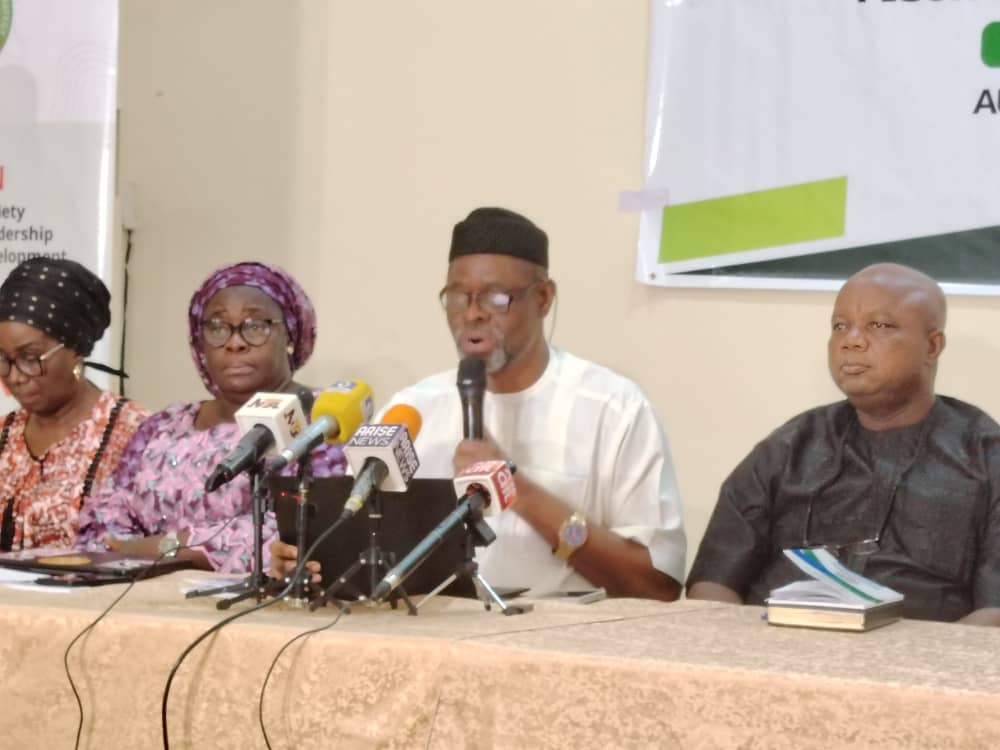
Speaking at the launch of the Male Feminist Network MFN project in Abuja on Friday, the organization’s Founding Executive Director, Dr Otive Igbuzor, said the statistics remain “sobering,” with harmful cultural and religious norms still fuelling abuse, while survivors continue to face silence and stigma.
According to him, genuine change cannot be left to women and women-led organizations alone, but must also involve men willing to challenge societal privileges, unlearn harmful masculinities, and embrace feminist principles.
“For too long, the responsibility for change has been placed solely on women, but history shows that true transformation requires everyone’s involvement—especially men who are ready to live out feminist values,” Igbuzor stated.
He also voiced strong support for the Special Seats Bill before the National Assembly, expressing optimism that it would be passed this time around.
Igbuzor noted that while constitutional provisions for women’s representation have repeatedly failed to secure the required two-thirds majority since 1999, mobilization and political backing for the bill are now stronger than ever.
Board Chairperson of Centre LSD, Kyauta Agmadalo Giwa, described the MFN project as a united effort to change narratives, challenge entrenched stereotypes, and create a fairer society.
She commended the Ford Foundation for backing the initiative, noting that its support goes beyond funding to endorsing the urgent need for male involvement in gender equality efforts.
According to her, feminism is not just a women’s issue, but a human issue.
She said; “The Male Feminist Network brings together men from diverse backgrounds who are committed to dismantling patriarchy, challenging gender stereotypes, and amplifying women’s voices rather than speaking over them.”
The two-year project, supported by the Ford Foundation, aims to build a strong national network of male allies, train at least 1,000 male leaders and grassroots influencers, and engage traditional, religious, and cultural leaders to adopt gender-sensitive practices.
It will also use traditional and digital media to counter toxic masculinity and promote inclusive gender narratives.
Centre LSD noted that GBV remains one of Nigeria’s most pressing human rights issues. Data from the National Demographic and Health Survey NDHS and the National Bureau of Statistics NBS indicate that more than 35% of Nigerian women have suffered physical violence, while many more endure emotional, sexual, and economic abuse.
The organization emphasised that men—often either perpetrators or passive witnesses—hold influence across key institutions, and when that influence is channelled toward equality, it can lead to “profound change.”









 has raised alarm over the plight of Nigerian women, revealing that)