




























By Ismail Shuaib
ABUJA: The House of Representatives has launched a sweeping investigation into the alleged non-repatriation of Nigeria’s crude oil export proceeds estimated at over $850 billion between 1996 and 2014, describing it as one of the biggest financial leakages undermining the nation’s economic stability.
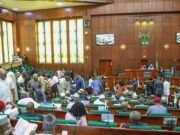
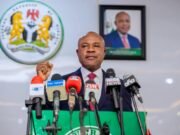
Chairman of the House Ad-Hoc Committee on Pre-Shipment Inspection of Exports and Non-Repatriation of Crude Oil Proceeds, Hon. ‘Seyi Sowunmi, disclosed this on Wednesday during the Committee’s inaugural press briefing at the National Assembly, Abuja.
Sowunmi said preliminary findings indicate a major breakdown in compliance with the Pre-shipment Inspection of Exports Act, with oil sector operators allegedly failing to repatriate between 40 and 45 percent of Nigeria’s crude oil export proceeds — contrary to the law mandating full repatriation within 90 days for oil exports and 180 days for non-oil exports.
He also raised concerns about discrepancies in export-earnings data across government agencies, including the Central Bank of Nigeria (CBN), Nigerian Upstream Petroleum Regulatory Commission (NUPRC), Nigerian National Petroleum Company Limited (NNPCL), and the National Bureau of Statistics (NBS), as well as inconsistencies between Nigerian and OPEC figures.
According to the lawmaker, non-oil exports—particularly solid minerals and agricultural commodities—are also plagued by “high non-compliance and poor repatriation records.”
Sowunmi explained that the Pre-shipment Inspection of Exports Act (CAP P26, Laws of the Federation of Nigeria, 2004) established the Nigerian Export Supervision Scheme (NESS) to curb capital flight, ensure proper valuation, and protect Nigeria’s foreign exchange earnings. Before the law’s enactment, he said, the country suffered massive revenue losses through under-valuation, delayed invoicing, price manipulation, illegal swaps, and overloading of shipments.
The Committee, he said, will determine the volume and value of unrepatriated export proceeds from oil, gas, and non-oil sectors since 1996, identify the causes of conflicting export data, and conduct a forensic reconciliation of export-proceeds accounts. It will also review the management and utilization of NESS funds.
“This Committee will be guided strictly by evidence, not speculation. Our work will be document-based, data-driven, transparent, and verifiable,” Sowunmi assured. “Our goal is simple: Nigeria must receive, in full and promptly, every dollar legally due from its exports.”
He emphasized that the House, under the leadership of Speaker Tajudeen Abbas, remains committed to supporting President Bola Tinubu’s Renewed Hope Agenda by plugging revenue leakages and recovering lost funds for the Federation Account.
To aid its work, Sowunmi announced that the Committee would leverage whistleblowing channels, offering confidentiality and possible financial incentives for credible information from industry insiders, bankers, inspection agents, and concerned citizens.
“The Committee will actively use existing whistleblowing frameworks, guaranteeing protection and rewards for credible tips that expose fraud or manipulation in the export value chain,” he said.
He called for the cooperation of all stakeholders—operators, regulators, exporters, and financial institutions—describing the probe as a “whole-of-system exercise” aimed at rebuilding transparency in Nigeria’s export sector.
“Operators must provide shipment-to-receipt trails; regulators must reconcile production and FX returns; and banks must supply account-level evidence of repatriation within the stipulated time. Where breaches are uncovered, civil and criminal sanctions will apply,” he warned.
Sowunmi stressed that the probe was non-partisan and focused solely on protecting Nigeria’s economic integrity.
“Our success will not be measured by publicity, but by verifiable financial recovery to the Federation Account,” he said. “This inquiry is about defending the economic soul of our nation.”
Acknowledging the media’s role, he urged journalists to ensure accurate, fact-based reporting and avoid speculative figures, assuring that the Committee would release periodic factual updates and publish non-sensitive documents when necessary.
“The success of this Committee depends on collective support and cooperation,” Sowunmi concluded. “Together, we can ensure that Nigeria receives every cent due from its exports.”