



















By Omeiza Ajayi
A tragedy that sparked reflection. There is a popular true-life story among sign language specialists.
Some years ago, during a violent crisis in one part of Nigeria, security operatives spotted a young man running towards them. Despite repeated warnings to stop, he kept running. Believing him to be a threat, they shot him in the leg.
But when they got closer, they realized the chilling truth — he was not a criminal. He was deaf and unable to hear their commands.
That incident illustrates the dangerous gap between law enforcement and the hearing-impaired community.
That tragic incident underscores a dilemma many persons with disabilities face in their daily interactions with law enforcement. For decades, communication barriers have left millions of Nigerians in the deaf and hard-of-hearing community on the margins of public safety. But now, for the first time in the country’s security history, an agency is taking deliberate steps to bridge that gap. The bold step by the Nigeria Security and Civil Defence Corps NSCDC may change that narrative forever.
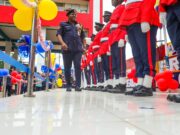
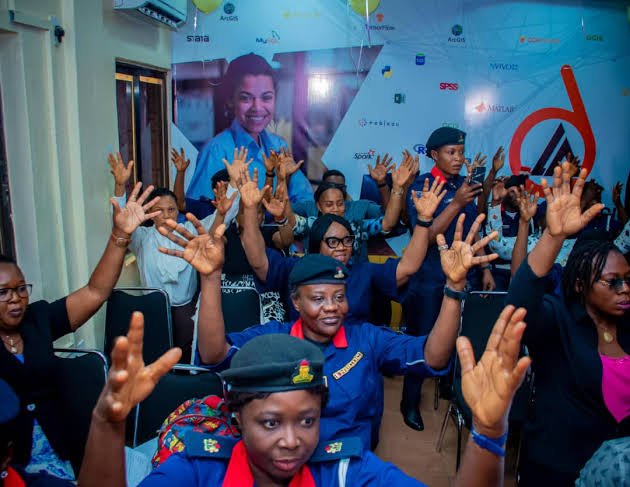
With great support from its Commandant General, Prof. Ahmed Abubakar Audi, the FCT Command of the NSCDC recently certified 250 officers in sign language proficiency, making history as the first agency in Nigeria’s Defence, Security, Intelligence and Emergency Response circles to integrate inclusive communication into its core operations.
For the NSCDC, sign language is more than a skill — it is a symbol of respect and recognition.
First-of-Its-Kind Training
The training, powered by Deaf-in-Tech in partnership with the Nigeria National Association of the Deaf, was themed: “Advancing Public Safety through Inclusive Protection: Fundamental Sign Language Workshop for NSCDC Officers.”
At their graduation, FCT Commandant of the NSCDC, Dr Olusola Odumosu noted that inclusion is at the heart of effective security. “By learning sign language, you have made a vital commitment to ensuring the voices of the deaf and hard-of-hearing are heard”, he stated.
Security for All, Not for Some
According to him, the initiative was designed to bridge the communication gap in security operations.
“By acquiring these essential skills, you are equipped to bridge communication gaps and ensure that every citizen, regardless of their ability, feels a sense of safety and belonging.
“By acquiring this language, we are not only enhancing our professional capabilities but also breaking barriers, fostering understanding, and building a safer, more compassionate society,” he told the officers.
He described the training as part of the Command’s broader strategy to build a “resilient, professional and inclusive security outfit” capable of responding to the evolving needs of society.
Beyond Protection, Towards Understanding
Odumosu was emphatic that security must go beyond uniforms and weapons.
“Your role goes beyond mere protection; it encompasses understanding and addressing the diverse needs of all members of the community, especially at the grassroots.”
He added that the Command’s embrace of sign language was not just a professional step but a symbol of respect for diversity and a commitment to inclusive security.
Inclusion isn’t Charity
For Dr Arowolo Ayoola, founder of Deaf-in-Tech, the initiative was a powerful statement that persons with disabilities are integral to nation-building.
He emphasized the importance of inclusion, stressing that security systems must reflect the diversity of the citizens they serve.
“Inclusion is not charity. It is not a favour to the minority. It is about belonging. It says you matter and you are part of us,” he said.
He warned against forcing marginalized groups to create parallel institutions.
“Imagine having a security organization for the deaf, another for the blind and so on. Would we still be one nation? We cannot build a nation that works for only a section of the citizens, designing systems that work only for the able-bodied and assume that all others would somehow be fine.
“Over 250 officers of the Command have now been trained to understand and communicate with members of the deaf community. The message they have sent to the deaf community is that they are not a burden, they are not alone. It has affirmed trust,” he added.
The deaf community thereafter named Odumosu as its number one inclusive advocate, urging other agencies to key in.
Security as a Human Right
For Dr Ayuba Burki Gufwan, Executive Secretary of the National Commission for Persons With Disabilities NCPWD, the training represents a new frontier.
“Security is a fundamental human right which must be made accessible to every citizen,” he said.
He urged all security agencies to mainstream sign language training in their curriculum.
Similarly, Haruna Mohammed, President of the Nigeria National Association of the Deaf, praised NSCDC for “setting the pace” and underscored the importance of sign language in intelligence gathering and covert field operations.
He also called for dedicated recruitment slots for the deaf, citing the National Drug Law Enforcement Agency NDLEA, which has already employed five deaf personnel.
Beyond Sign Language
While the sign language initiative is groundbreaking, it is only one part of a broader transformation happening within the FCT Command under Odumosu’s leadership.
For the first time, the Command has established a Rapid Response Squad to handle emergencies more effectively. It has also launched several specialized training programmes covering intelligence gathering, advanced investigation, tactical response drills and professionalism for armed squad personnel.
Perhaps most impressive is the state-of-the-art training ground currently under construction in Abuja. Built by a private company at no cost to government — a testament to Odumosu’s negotiation skills — the facility is expected to rival some of the best military training centres in the country.
Human Stories Behind the Training
For members of the deaf community, the programme is more than symbolic — it is life-changing. It is more than statistics. It is about survival, dignity and trust.
A deaf resident in Abuja, speaking through an interpreter, said:
“Sometimes, when you cannot respond quickly to questions, they think you are hiding something. Some of us have been harassed. Now, knowing that there are officers who understand us, it gives us hope.”
For the officers, the programme was equally transformative. A female participant from the Gwagwalada Division admitted:
“I never realized how much the deaf community struggles until I started learning sign language. It has changed the way I see my job. We are not just protecting people; we are connecting with them.”
A Model for Other Agencies
Security experts argue that the NSCDC initiative could serve as a model for the police, armed forces and intelligence agencies.
“Inclusive security is the future,” said a retired intelligence officer. “You cannot claim to protect people you cannot communicate with. The deaf community, like every other group, has valuable intelligence to offer. Ignoring them is a blind spot that criminals could exploit.”
Looking Ahead
As the officers celebrated their certification, the message was clear: Nigeria’s security architecture must evolve to reflect the realities of its diverse population.
For Odumosu, the journey is only beginning. “This is not the end; it is the beginning of a new chapter. We will continue to build a security system where no one is left behind.”
In a country often fractured along ethnic, religious and political lines, the NSCDC’s initiative offers a different kind of hope — one built on empathy, inclusion and shared humanity.
And perhaps, one day soon, no hearing-impaired Nigerian will ever again have to fear being misunderstood in the moments that matter most.