































.Adopts First National Policy on Menstrual Health and Hygiene
The Federal Government has removed tax on sanitary pads and has formally validated and adopted the country’s first National Policy on Menstrual Health and Hygiene Management MHHM.
The policy is aimed at addressing challenges that hinder women and girls during menstruation.
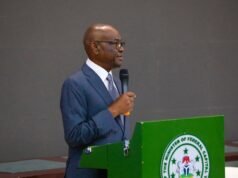
At the event Friday in Abuja, Minister of Women Affairs and Social Development, Hajiya Imaan Sulaiman-Ibrahim, described the move as a major step towards ensuring that menstruation never becomes a barrier to education, work or social participation.
Represented by Dr Maryam Keshinro, the minister praised President Bola Tinubu’s recent approval of a tax waiver on sanitary pads, noting it reflected the government’s commitment to advancing gender equality and public health.
According to her, women aged 15–49 make up between 25 and 30 percent of Nigeria’s population — tens of millions of whom menstruate monthly. She warned that inadequate menstrual hygiene can worsen existing health challenges, pointing out that 15 percent of girls aged 15–19 are already mothers or pregnant, while 7.3 million adolescent girls and women suffer from undernutrition and 55 percent experience anaemia.
“From the largest cities to the most remote villages, and even in IDP camps, menstruation is a normal biological process,” she said. “It should never be a source of stigma, shame, or financial burden.”
She listed poor access to sanitary products, insufficient water and sanitation facilities, misinformation, and entrenched cultural taboos as factors that force girls to miss school and expose women to avoidable health risks. The new policy, she explained, will integrate menstrual health into national plans for education, health, water and sanitation, and gender equality, with a 2030 vision where no girl is forced to choose between her period and her education.
Implementation, she added, will demand political will, cross-sector collaboration, and active involvement from states, communities, and development partners.
Mrs Fifi Ogbondeminu, Acting Country Representative of Population Services International (PSI) Nigeria, described the policy’s adoption as a milestone in ending the “silent burden” of menstruation. Represented by Abdulhameed Adediran, she stressed that menstrual health is a human rights and gender equality issue, calling for affordable products in both rural and urban areas, inclusion in school and community programmes, and the dismantling of stigma.
WaterAid Nigeria’s Country Director, Evelyn Mere, represented by Dr Theodora Ngozika-Igboaneka, said the policy would help expand access to clean water, proper sanitation, waste disposal, and hygiene education. She added that communities addressing menstrual health have seen improvements in school attendance, workplace participation, and openness around the subject.
Policy consultant Mrs Mabel Adinya-Ade noted that the framework’s goal is to guarantee safe menstrual management for vulnerable women and girls nationwide, ultimately promoting dignity, equality, and participation.