





































By Ismail Shuaib
ABUJA: The Federal Government has announced plans to decriminalize attempted suicide in Nigeria by December 2025 as part of ongoing reforms to strengthen mental health care across the country.
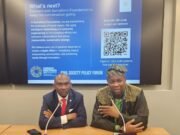
The Coordinating Minister of Health and Social Welfare, Prof. Muhammad Pate, disclosed this on Wednesday at a press briefing in Abuja to mark the 2025 World Suicide Prevention Day, themed “Changing the Narrative on Suicide: Creating Hope Through Action.”
Globally observed on September 10, the day seeks to raise awareness on suicide prevention. According to the World Health Organization (WHO), over 720,000 people die by suicide annually, with 73 percent of the deaths occurring in low- and middle-income countries.
In Nigeria, attempted suicide remains a criminal offence under Sections 327 and 231 of the Criminal and Penal Codes—an approach mental health experts say fuels stigma and discourages help-seeking.
To reverse the trend, government inaugurated a National Taskforce on the Decriminalization of Attempted Suicide in October 2024, chaired by Prof. Cheluchi Onyemelukwe. Since then, progress has been recorded, including the completion of a white paper and the drafting of the National Mental Health Act Amendment Bill 2025.
The bill seeks to repeal punitive laws, decriminalize attempted suicide, bar the prosecution of survivors, and provide access to care and support. Both the white paper and the amendment bill have been adopted by the ministry and forwarded to the Attorney-General of the Federation for further input.
“The next step is to present a memo before the Federal Executive Council for an Executive Bill on decriminalization,” Pate, represented by the ministry’s Permanent Secretary, Daju Kachollom, said.
He emphasized that early detection of warning signs, greater awareness, and accessible mental health services are key to reducing suicide rates.
Also speaking, Kachollom, represented by Dr. Nse Akpan, Director of Port Health Services, stressed that criminalizing suicide attempts worsens stigma.
“Criminalizing suicide attempts does not save lives. Instead, it discourages people from seeking help and adds punishment to personal suffering. Our ministry is determined to change this narrative,” she said.
The National Coordinator of the National Mental Health Programme, Dr. Tunde Ojo, reaffirmed government’s commitment, noting that people in crisis deserve compassion and support rather than punishment.